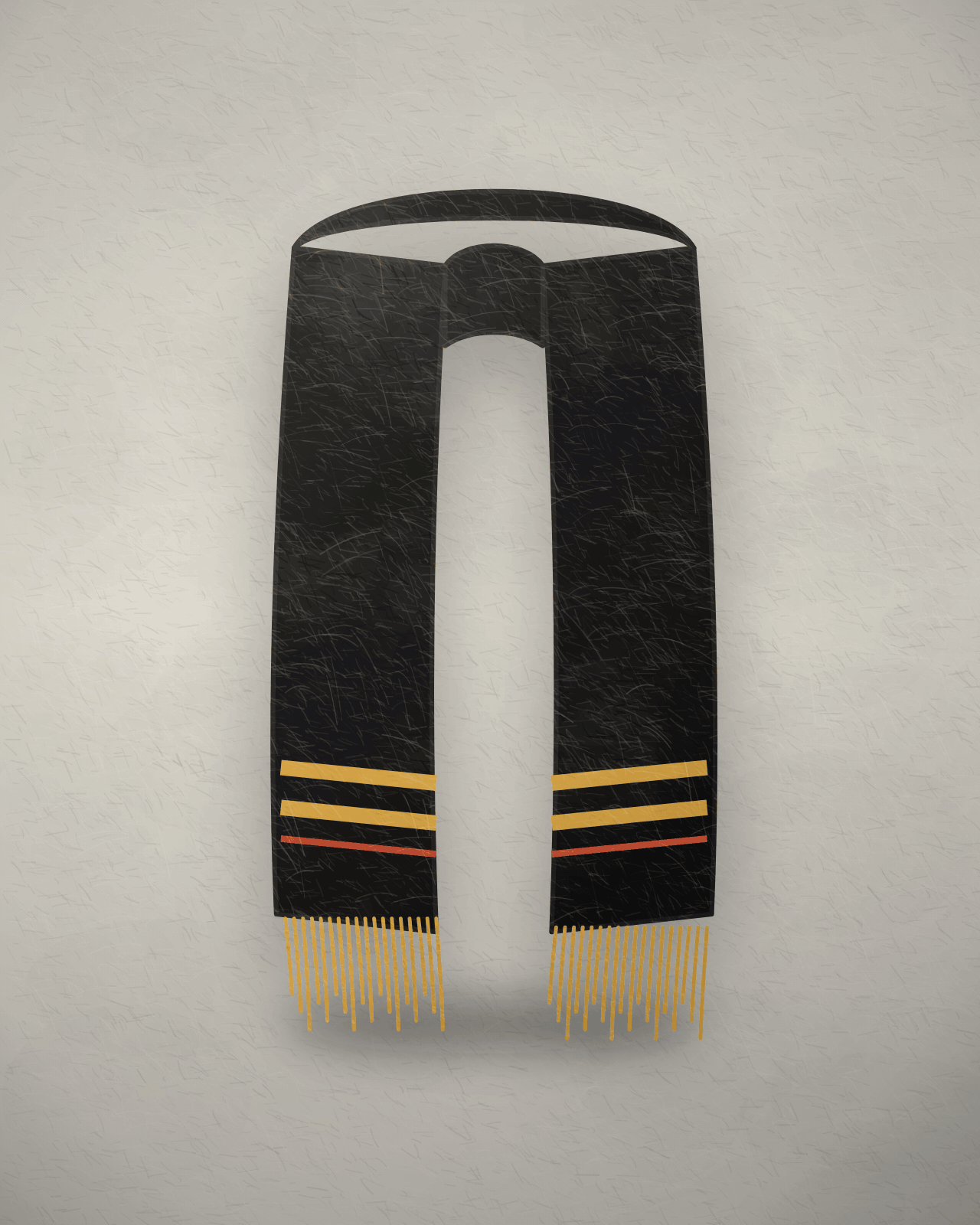
The name says scarf. FRANS is Swedish for the fringe on a scarf, and that is a pleasant reason to start there. It did not hold as the only reason once we ran the numbers, so we ran them again and arrived at the same place for three other reasons.
The returns
Clothing is returned three to four times more often than accessories in all three Nordic markets. Swedish fashion retail sits at a 24.9 percent return rate, the metropolitan areas at 27.9, and the premium segment is hit hardest because the customer orders two sizes and sends one back.
| Share of purchasing value | Category | Expected return rate |
|---|---|---|
| 60 to 70 percent | Scarf, slipper, small accessories | 6 to 8 percent |
| 20 to 25 percent | Silk shirt | In between |
| At most 10 to 15 percent | Velvet blazer | Budgeted at 28 percent or more |

A return costs us shipping both ways, the handling, and in practice the entire margin on that order. An assortment where two thirds of the items return at six percent behaves quite differently in cash flow than one made of blazers.
The size curve
A scarf has no size. A shirt has nine, if we are to cover XS to XXL in two fits. That means a shirt ties up roughly five times as much capital as a scarf for the same number of garments sold, because stock has to hold every size at once and the outermost ones are always the ones left.
The gift
A scarf can be given away without knowing anyone's measurements. Our first collection lands in November and has to sit in the gift phase up to Christmas, and in that phase people buy for someone else. A scarf, a slipper and a gift card are the three things that work when the recipient is not in the room.
What argues against it
The scarf has the lowest unit price in the assortment and therefore carries the least absolute margin per unit sold. It needs volume to mean anything, and volume needs someone to know we exist. That is the open risk in the whole argument, and it cannot be calculated away.
Nor do we have a figure of our own yet. The return rates above come from industry statistics, not from our own sales, since we have sold nothing. In the first year we measure our own and rewrite this text if the numbers say something else.
Sources
- E-barometern, kvartalsrapport. PostNord i samarbete med Svensk Handel, 2025.
- Sortimentsplan och kalkyl, kapitel 5. FRANS ANDRÉ, internt underlag, 2026-08-05.